Most LinkedIn messages get ignored – not because people aren’t interested, but because they’re overwhelmed. The good news? Following up can dramatically improve your chances of getting a response with the right LinkedIn strategies. Here’s what works:
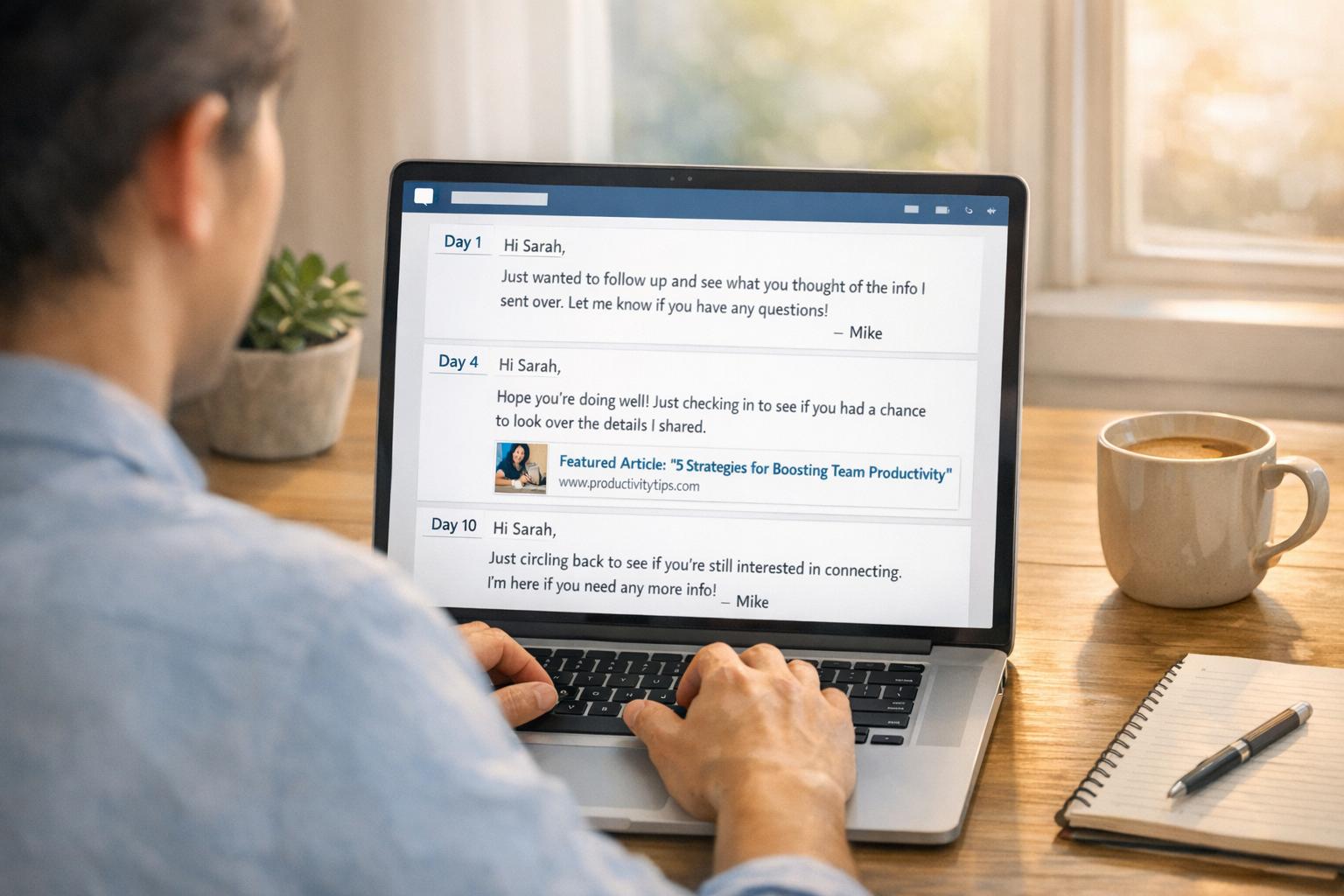
- Timing matters: Wait 3–5 business days after your first message, and space subsequent follow-ups 5–7 days apart.
- Personalize every message: Reference their profile, recent activity, or shared connections.
- Provide value: Share relevant insights, articles, or solutions tailored to their challenges.
- Keep it short: Limit follow-ups to under 75 words with a clear, actionable next step.
- Know when to stop: Stick to 2–3 follow-ups over 14–21 days to avoid coming across as pushy.
The secret? Focus on being helpful, not persistent. Each follow-up should add something new to the conversation. If you’re respectful of their time and offer meaningful content, you’ll stand out in their crowded inbox.
LinkedIn Message Follow-Ups (How to Get Replies in 2026?)
sbb-itb-3e8f5dc
When to Send Follow-Up Messages
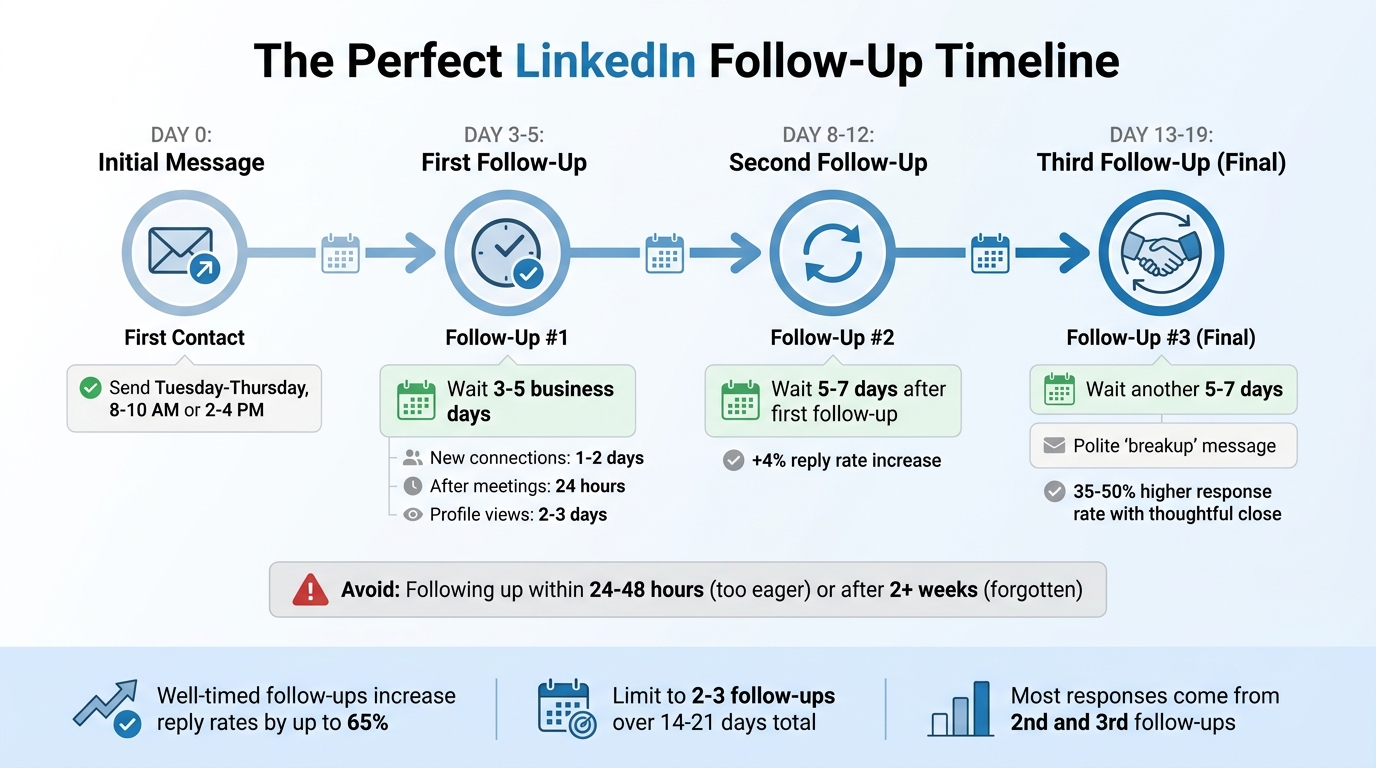
LinkedIn Follow-Up Timing Strategy: 3-Touch Sequence Over 14-21 Days
Getting the timing right can make a huge difference in your response rate. Often, people don’t reply simply because they’re busy, not because they’re not interested. Well-timed follow-ups can increase reply rates by up to 65%. Interestingly, the second and third follow-ups tend to bring the biggest jumps in responses. But timing is everything – following up too quickly (within 24–48 hours) might come across as overly eager, while waiting more than two weeks could make them forget about you entirely.
For LinkedIn follow-ups, the ideal window is usually 3–5 business days after your first message. After that, spacing follow-ups 5–7 days apart helps you stay on their radar without being intrusive.
First Follow-Up: 3–5 Days After Initial Contact
If your first message doesn’t get a reply, give it 3–5 business days before following up. This timeframe keeps the conversation relevant while giving the other person enough breathing room. However, there are some specific situations to consider:
- New Connections: For someone you’ve just connected with, follow up within 1–2 days.
- After Meetings or Calls: Send a follow-up within 24 hours to maintain momentum.
- Profile Views or Message Reads: If they’ve viewed your profile or read your message but haven’t replied, a gentle reminder after 2–3 days works well.
Timing within the day also matters. Aim to send follow-ups Tuesday through Thursday, between 8–10 AM or 2–4 PM in their local time zone. Avoid Monday mornings and Friday afternoons, as these are typically less productive times for most professionals.
Second and Third Follow-Ups: 5–7 Day Intervals
If your first follow-up doesn’t land, wait another 5–7 days before sending a second message. This approach keeps you persistent without coming across as overbearing. Here’s a key insight: many people stop after just one follow-up, but most sales or professional conversations require multiple touchpoints. A well-timed second follow-up can increase reply rates by about 4 percentage points.
Limit your total follow-ups to 2–3 messages over a span of 14–21 days. If there’s still no response, close the loop politely. Interestingly, messages that end on a thoughtful note often see a 35–50% higher response rate because of the psychological principle of loss aversion.
"You don’t need to send 7 follow-ups to get results. The best reply rates come from a well-timed second or third follow-up, not just hammering the same CTA." – Laura Hannah, Founder, Pitch121
Using Cesar.chat to Track Follow-Up Schedules
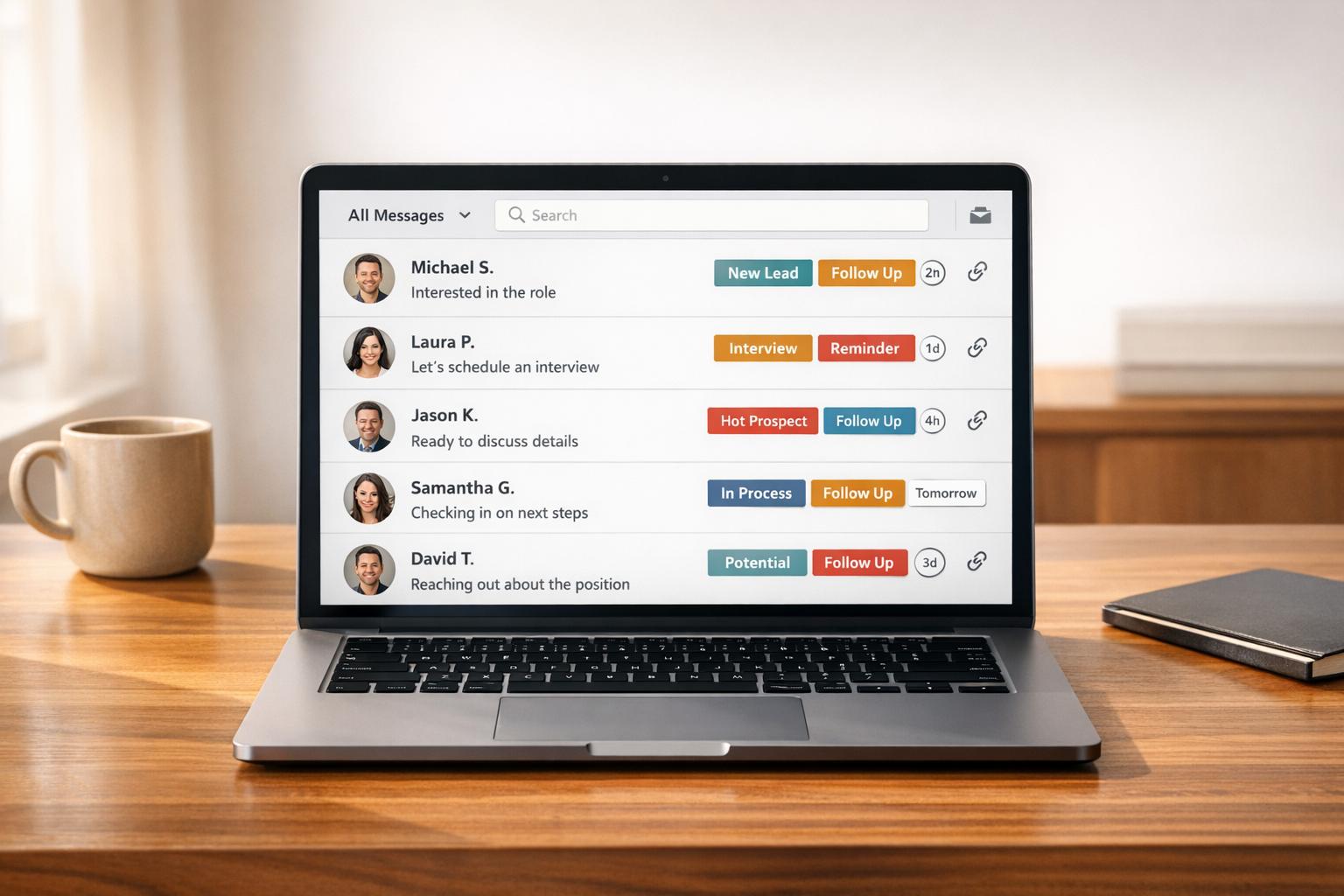
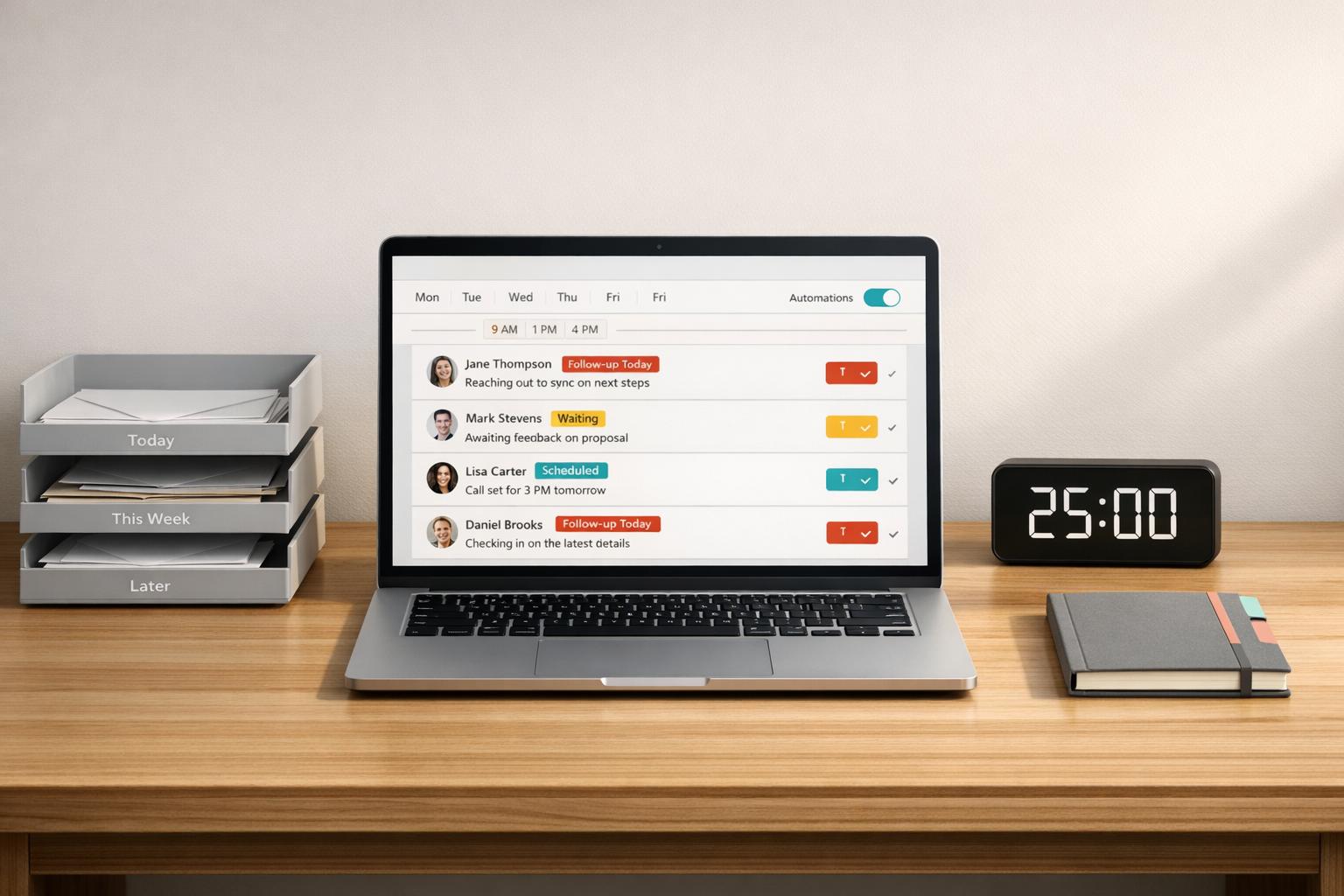
Managing follow-ups manually can get overwhelming, but tools like Cesar.chat make it easier. With its snooze threads feature, you can temporarily hide conversations and set reminders to follow up at just the right time. Instead of digging through your inbox, snoozed messages pop back up when it’s time to reconnect.
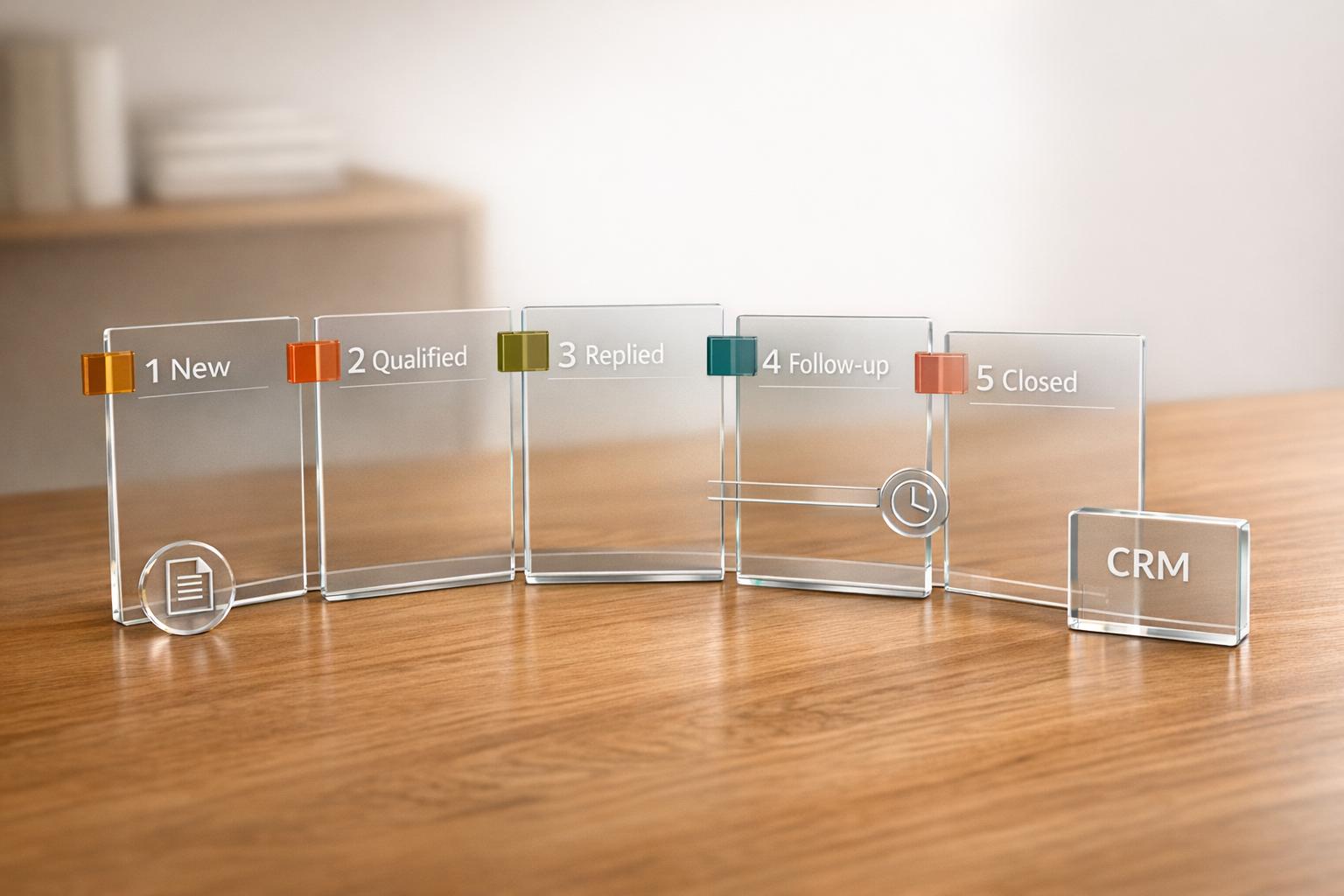
Cesar.chat also integrates seamlessly with platforms like Notion, HubSpot, and Salesforce. You can automate reminders based on your preferred schedule – whether that’s every 3 days, 5 days, or something custom. Plus, with automatic CRM syncing, every follow-up gets logged without extra effort. It’s a simple way to handle large-scale outreach without missing a beat.
How to Personalize Your Follow-Up Messages
Generic follow-ups often get overlooked, while tailored messages can boost engagement by 27%. The difference lies in demonstrating that you’ve put thought into your outreach – reviewing someone’s profile or recent activity instead of sending out cookie-cutter templates. A simple rule: if swapping out the recipient’s name doesn’t change the essence of your message, it’s not personalized enough. Let’s break down how to make your follow-ups more meaningful.
Reference Their Profile or Recent Activity
Focus on what’s happening in their professional life right now. Maybe they recently announced a Series B funding round, shared a post about hiring challenges, or commented on industry trends. A message like, "Congrats on the Series B – growth stages like this often bring [specific challenge]", shows you’re paying attention. Similarly, you could reference their content with something like, "Your recent post on pricing psychology was spot-on".
Shared connections can also work wonders for personalization. Mentioning a mutual contact adds credibility and often increases response rates. For instance: "[Name] suggested I reach out – he said you’d be the best person to discuss [topic]". If they’ve viewed your profile without responding to your initial message, try: "Noticed you checked out my profile – did anything about [topic] catch your interest?".
Mention Previous Conversations
Each follow-up should naturally build on your earlier interaction. Bring up specific points you discussed in your first message. For example, if you asked about their freemium pricing strategy, you could say, "Still curious to hear your thoughts on the freemium question we touched on last week". If you sent over a resource, follow up with, "Did the article on [specific topic] align with your current goals?".
Skip vague phrases like "just following up" or "a quick reminder" – they don’t add value. Instead, offer something new, like a different perspective, a relevant resource, or even an easy choice to encourage a reply. For example: "Would a 10-minute call be helpful, or should I send over a case study first?".
"Helpful follow-ups don’t feel like follow-ups at all. They feel like new messages that happen to reference the first one." – Kolin Simon, Sales and Marketing Expert
Provide Value in Every Follow-Up
When crafting personalized follow-ups, make sure every message offers something meaningful.
Follow-ups that focus on delivering value consistently outperform those that are purely pitch-driven. In fact, value-first messages can perform up to three times better than pitch-first ones. Sharing an industry report, linking to a case study, or pointing out a relevant trend positions you as a helpful resource – not just another person vying for their attention. Warm, value-driven follow-ups typically see response rates between 15–25%, compared to the 2–5% response rate of cold pitches.
Each follow-up should feel like a fresh conversation, adding to what’s already been discussed. Offer something useful, whether it’s a timely article, a unique take on an industry challenge, or even a specific observation about their recent achievements.
Share Articles, Reports, or Industry Insights
Provide content that aligns with the recipient’s role or recent activities. For example, if they’ve spoken about hiring challenges, you might share insights about remote work and its influence on talent acquisition. If their company has just secured funding, send over a concise study on scaling operations during growth phases. Add a one-sentence takeaway, such as: "This section on response time benchmarks could be helpful as you scale."
Be specific in your commentary. Instead of saying, "Here’s an interesting article," try something like: "This report highlights how companies in your industry are tackling [specific challenge] – check out the section on page 4." And remember, short videos (under 2 minutes) often grab more attention than lengthy PDFs or blog posts.
Propose Solutions or New Ideas
Focus on their unique challenges when suggesting solutions. For instance, if pricing strategies came up in a prior conversation, mention shifts towards usage-based pricing models. Stay timely by referencing trigger events, like a new product launch, a funding announcement, or a key hire.
Keep the focus on their needs, not your product. Instead of jumping straight to a meeting request, try something like: "Other VPs in your industry have mentioned [specific challenge]. Would a 10-minute call help, or should I send over a case study first?".
"Rachel nudged. Jason added value. And that’s the secret to LinkedIn follow-up messages that actually work: every touch should give the recipient a reason to engage, not just a reminder that you exist." – Kolin Simon, Sales & Marketing Expert
Write Short and Clear Follow-Ups
Once you’ve tailored your message to highlight specific value and insights, it’s essential to keep it short and actionable. A concise follow-up ensures your message grabs attention, especially on mobile devices.
Aim for follow-ups under 75 words to make them easy to read on any screen. The best follow-ups focus on one idea and avoid filler phrases like "just checking in" or "bumping this up".
Think of your message as having three key parts: a context hook (a specific reference to your earlier interaction), a value bridge (a helpful insight or resource), and a call-to-action (a simple, actionable next step). This structure keeps your follow-up clear and to the point.
Keep Messages to 2-3 Short Paragraphs
Limit your message to three short paragraphs, each with no more than 2–3 sentences. After writing, review your draft to see if you can say the same thing with fewer words. Cut out anything that doesn’t add value or new information.
Instead of open-ended questions, go for low-effort, binary ones. For example, ask something like, "Would this be helpful to your team?" rather than leaving them to figure out what you need. This naturally leads to a focused call-to-action.
Include a Specific Call-to-Action
A clear and specific call-to-action (CTA) is crucial. Binary choices often work better than open-ended questions. For instance, instead of asking, "When can we talk?", try something like: "Would a 10-minute call help, or should I send over a case study?" This approach simplifies their decision-making and makes it easier for them to respond.
Tie your CTA to an actionable next step, such as: "Would a quick 15-minute conversation help your team?" The goal is to make your ask specific, easy to act on, and directly tied to the value you’ve provided.
| CTA Type | Example Phrase | Why It Works |
|---|---|---|
| Binary Choice | "Would a 10-minute call help, or should I send over a case study first?" | Simplifies the decision by offering two straightforward options |
| Low-Lift | "If you’ve got 15 minutes in the next two weeks, I’d love to chat." | Keeps the time commitment minimal |
| Soft Close | "If timing isn’t right, feel free to reach out later. I’ll stop filling your inbox!" | Shows respect for their time while leaving the door open for future contact |
Follow-Up Strategies for Different Situations
Crafting the right follow-up strategy requires adapting your approach to the situation at hand. Balancing persistence with respect is key when it comes to LinkedIn messaging. Each scenario demands careful attention to tone, timing, and content.
After Someone Accepts Your Connection Request
Timing is everything once someone accepts your connection. Avoid the temptation to send an immediate sales pitch – it rarely works, with response rates hovering around just 2–5%. Instead, give it a few hours or wait until the start of the next business day to send your first message.
Your initial message should follow a simple structure:
- Acknowledge the connection: Mention shared interests or mutual connections.
- Offer value or spark curiosity: Share something relevant or thought-provoking.
- Keep the tone low-pressure: Avoid making it feel transactional.
"Your first message should feel like the start of a conversation, not the end of one."
– Kolin Simon, Founder & CEO, Pursue Networking
Keep your message concise – fewer than 400 characters. Messages longer than this tend to perform 22% worse in terms of response rates. Want better results? Spend 2–3 weeks engaging with their content (likes and comments) before reaching out. This approach can improve response rates to 15–25% compared to the 2–5% seen with immediate pitches.
If your first message doesn’t get a response, don’t give up – adjust your strategy as outlined below.
When Your Initial Message Gets No Response
If your first message is ignored, avoid generic follow-ups like "just checking in" or "bumping this up." These can come across as pushy or impersonal. Instead, use a three-touch cadence: your initial message, followed by two additional follow-ups over 14–21 days. Each follow-up should bring something new to the table, such as:
- A fresh insight or perspective.
- A relevant case study.
- A different angle on the topic you introduced earlier.
Before reaching out again, check if they’ve viewed your profile or interacted with your posts. Tailor your message accordingly. For example, if they’ve recently shared news about a product launch or funding milestone, use that as a natural conversation starter.
When it’s time for the final follow-up, consider sending a "breakup" message. This polite, no-pressure note can actually increase response rates by about 4 percentage points.
After a Meeting or Phone Call
Following up after a meeting or call is all about keeping the momentum alive. Within 2–4 hours, send a message that thanks them for their time, recaps key points, provides any promised materials, and confirms next steps. A simple structure like this works well:
- Key Points Covered: A brief summary of the discussion.
- Agreed Next Steps: A clear outline of what’s next.
Within the next 2–7 days, share a resource – an article, case study, or industry report – that’s relevant to a challenge you discussed. Adding a note like "No response needed" offers value without creating pressure. Beyond that, between 7 and 21 days, focus on moving the conversation forward. Share materials or research that address any concerns raised during your call.
It’s worth noting that 80% of sales require at least five follow-ups after the first meeting, yet nearly half of salespeople stop after just one attempt. If the prospect goes silent after 3–4 touches, send a respectful "clean break-up" message. This can remove pressure while keeping the door open for future engagement.
"The best reply rates come from a well-timed second or third follow-up, not just hammering the same CTA."
– Laura Hannah, Founder, Pitch121
For ongoing conversations, tools like Cesar.chat can make follow-ups easier. Features like snooze threads and saved snippets ensure your outreach remains timely and personal, helping you maintain a genuine connection.
Mistakes to Avoid When Following Up
After discussing the importance of timing and personalization in follow-ups, it’s equally important to steer clear of missteps that could derail your efforts. Here’s a closer look at common mistakes to avoid to ensure your follow-ups remain professional and effective.
Avoid Generic, Copy-Paste Messages
Sending out generic templates like "just checking in" or "bumping this up" can hurt your credibility. These phrases often signal a lack of effort, and they typically result in lower response rates. In contrast, personalized messages see 27% higher engagement.
Every follow-up should feel fresh and relevant while still tying back to your original outreach. Before hitting send, take a moment to see if the recipient has interacted with your profile, engaged with your posts, or shared any updates. Use these actions as cues to tailor your message. For example, you could reference a recent post they shared, provide an article that aligns with their interests, or offer a new perspective on your initial message.
Don’t Overdo It – Limit Follow-Ups to 2-3 Messages
Stick to a maximum of three touchpoints: your initial message and two follow-ups. Going beyond this can risk your messages being marked as spam. Recent data shows that LinkedIn spam reports rose by 34% year-over-year, with 67% of users saying they receive too many generic requests.
"Three is the sweet spot. First message + two follow-ups over 14 days. If there’s still no reply, move on. Anything beyond that crosses into spam territory and damages your reputation."
– Kolin Simon, Sales & Marketing Expert
If your third attempt doesn’t get a response, it’s time to either try a different communication channel, like email, or accept that it’s not the right time. Silence often speaks volumes, and respecting it can protect your professional image.
Maintain a Polite, Respectful Tone
How you say something can matter just as much as when you say it. Approach your follow-ups as invitations rather than demands. Use phrases like "Would you be open to…?" or "Would it make sense to…?" instead of more forceful language like "We need to meet." This approach gives the recipient a sense of control and encourages collaboration.
Acknowledge their time with a brief note like "I know you’re busy" instead of over-apologizing with "Sorry to bother you". Avoid overly formal language that can come across as stiff or robotic. Instead, aim for a conversational tone that’s professional but easy to read, especially since over 60% of LinkedIn activity happens on mobile devices.
End your message with a soft close that allows the recipient an easy way out. For example, saying "If this isn’t a priority right now, no worries at all" shows respect for their time and reduces pressure, which can lead to better engagement.
Wrapping Up
Reaching out on LinkedIn doesn’t have to feel pushy. The key lies in timing, personalization, and offering value. Space your messages 3–5 days apart, reference specific details from the recipient’s profile or activity, and make sure each message provides something helpful. This approach transforms your outreach from being intrusive to genuinely professional.
Consistent effort pays off. By following the 3-touch rule – an initial message followed by two thoughtful follow-ups – you increase your chances of a response without risking your reputation. Many people stop after one attempt, but persistence (done right) is your advantage.
Keep messages short – under 75 words is ideal – use a conversational tone, and always include a clear call-to-action. Whether you’re networking, recruiting, or selling, the principles remain the same: respect the recipient’s time, deliver real value, and know when to step back.
Stick with these strategies, and you’ll not only improve your LinkedIn response rates but also build stronger, more meaningful professional connections.
FAQs
What should I say in a final “breakup” follow-up?
A thoughtful final follow-up after a “breakup” should recognize that the recipient may not be interested or available while politely signaling it’s your last message. For instance: "I understand if now isn’t the right time. I won’t follow up again, but feel free to reach out if your situation changes. Wishing you all the best." This strikes a balance between respecting their time and leaving the possibility for future communication.
How do I follow up if they read my message but didn’t reply?
If someone views your LinkedIn message but doesn’t respond, give it 3-5 days before sending a follow-up. When you do, keep it polite and focus on providing value. Instead of repeating your original message, reference something they’ve been active with on LinkedIn or share additional insights that might interest them. This technique keeps your follow-up professional and respectful while increasing the chances of a reply without sounding too persistent.
When should I switch from LinkedIn to email or another channel?
If your LinkedIn follow-ups don’t get a response within 3-5 days of your initial message, it might be time to switch to email or another communication channel. Similarly, if you’ve been interacting with their posts for 2-3 weeks and still haven’t heard back, email could yield better results. When following up, send a message that offers something valuable within 1-2 days. If you still don’t get a reply after several attempts, consider trying a new way to connect.